See the BAGAIL 4 Set/6 Set/8 Set Compression Packing Cubes Travel Accesso... on Amazon
See More Reviews on Amazon →BAGAIL's half-mesh compression cubes (4-, 6-, and 8-set configurations, ASIN B081JSFHZK, 4.6 stars across 6,277 ratings) are the set most parents land on when they want to squeeze baby clothes, diapers, and blankets into a carry-on or a stroller basket. They work, with conditions. The compression zipper does what it says until you overfill the cube, and the mesh half that helps you find a clean onesie in a dim hotel room is the same mesh that lets air creep back in. Buy them if you pack baby clothes, sleep sacks, and diapers in layers and want visible, compressed bundles in a carry-on or diaper bag. Skip them if you plan to vacuum-seal bulky bedding, or if you expect a cube to survive being sat on in checked luggage without strain.

Which BAGAIL set fits baby gear proportions?
See the BAGAIL 4 Set/6 Set/8 Set Compression Packing Cubes Travel Accesso... on Amazon
See More Reviews on Amazon →Set counts range from 4 to 10, and the mix matters more than the number. The 7-set, per specs, is 3 compression cubes plus 3 packing organizers plus a shoe bag. The 6-set in 30D ultralight denier adds a shoe bag and a laundry bag. The 8-set mesh version includes a laundry bag and shoe bag. That laundry bag is not a bonus for parents — it is the soiled-clothes bag, and it is the single accessory you will use hardest on a trip with an infant.
The problem is fixed sizing. Cube sets are cut for adult clothing: folded shirts, rolled pants, a pair of shoes. Baby gear runs to extremes. A sleep sack is bulky and awkward, while socks, mittens, and burp cloths are tiny and get lost inside a cube meant for a sweater. Owner reports suggest the mismatch is the most common complaint — the sets rarely line up with a baby's actual proportions.
| Set | What's included | Best for baby gear |
|---|---|---|
| 4-set | Compression cubes only | Light trips, diaper-bag inserts |
| 6-set (30D ultralight) | Cubes, shoe bag, laundry bag | Carry-on-only travel |
| 7-set | 3 compression cubes, 3 organizers, shoe bag | Mixed adult + baby packing |
| 8-set (mesh) | Cubes, laundry bag, shoe bag | Checked bags, family trips |
For a single baby and a carry-on, the 6-set covers the realistic load: one cube for clean clothes, one for diapers and wipes, one for blankets and sleep sacks, with the laundry bag for the soiled pile. The 4-set is the right call if you only want to organize a diaper bag — you do not need a shoe bag inside a diaper bag.
Half-mesh, full-mesh, or full-cloth: which matters for baby clothes?
This is the tradeoff parents rarely get explained. Mesh panels let air move, which matters for damp burp cloths, a rinsed bottle bib, or clothes that went into the bag slightly humid. Mesh is also why you can see what is in a cube without unzipping everything. But mesh compresses less effectively than solid cloth, because the panel itself gives rather than holding the packed volume flat.
Full-cloth cubes — the 30D and 40D ultralight versions — compress better and read as more protective against rough handling. The catch is that 30D and 40D nylon is thin. In checked luggage, owner reports describe ultralight deniers as flimsy, and the fabric can abrade or tear where it rubs against a hard-shell suitcase frame. There is also a 70D full-mesh grade for buyers who want heavier mesh rather than ultralight cloth.
Decision rule: half-mesh for diapers, wipes, and anything you need to spot fast; full-cloth for clothes and sleep sacks that need maximum squash. The half-mesh 6-black configuration sits in the middle, which is why it is the default pick — it does both jobs adequately rather than either job perfectly.
How much does the compression actually help in a stroller basket?
Compression cubes press air out of the layers you have already folded or rolled, using a second zipper that pulls the top panel down over the contents. Based on the mechanism and user feedback, expect a moderate reduction in bulk on soft items — clothes, blankets, a sleep sack. Expect almost nothing on rigid or already-dense items: a full pack of diapers, a can of formula, a hard-sided wipes case. Compression organizers reshape soft volume; they do not crush solids.
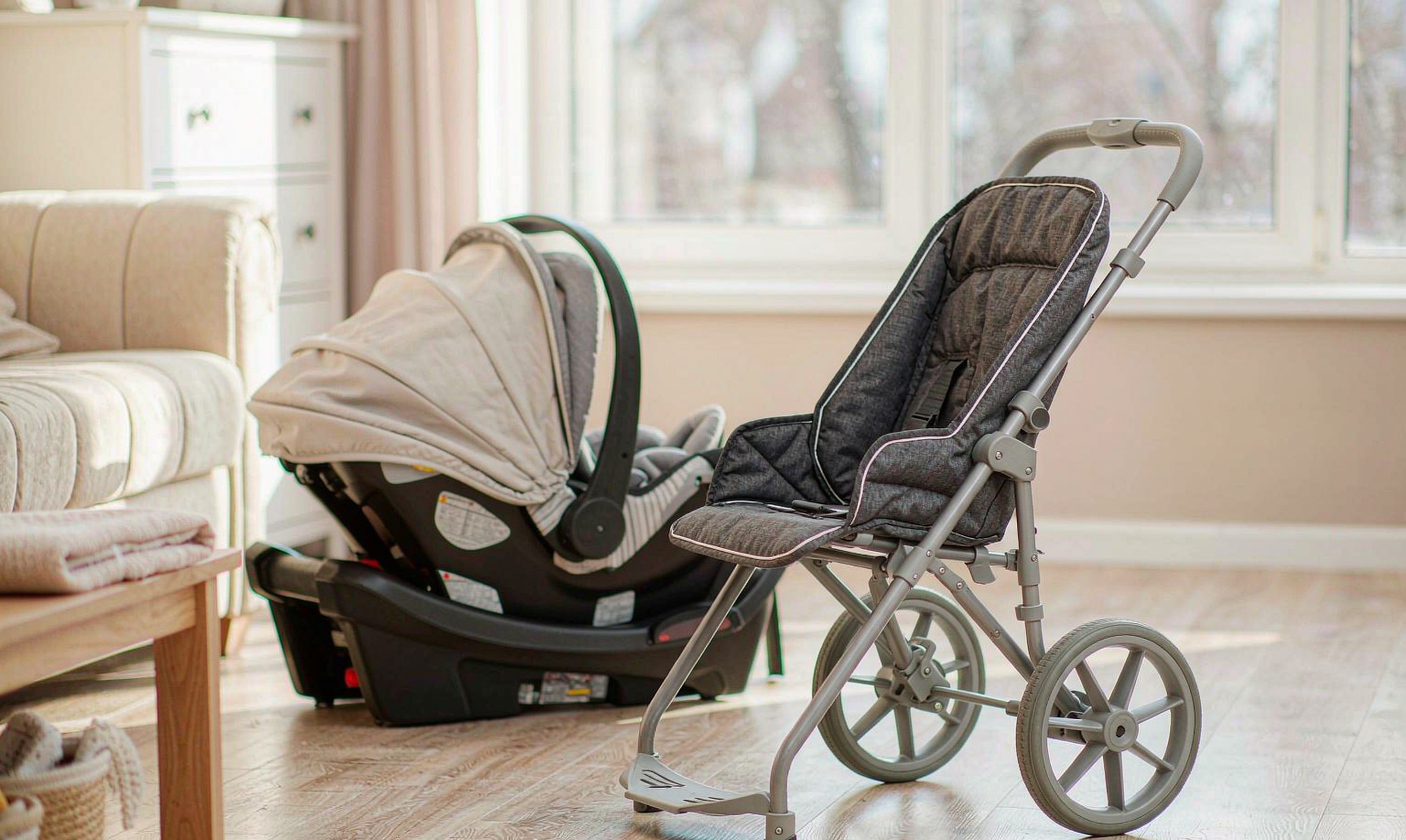
Where this matters for parents is the two spaces that are always too small. A stroller underseat basket is shallow and irregular, so a cube that has been compressed flat slides in where a loose pile will not, and it stays put when you fold the stroller. A car-seat footwell is the same story — the compression cube gives you a squared-off block instead of a bag that slumps. Neither space rewards a cube you have overfilled, though.
The strain point is the compression zipper. Parents report cubes bulging past the compression line when the cube is packed full, and the zipper is what fails first. If a cube resists the second zip, take something out — do not force it.
What about vacuum bags for baby bedding?
BAGAIL also sells TPU travel vacuum bags with an IPX8-rated zipper, a rechargeable pump model, and a no-pump variant. For genuinely bulky items — a thick sleep sack, a quilted blanket, a spare mattress cover — vacuum bags remove far more air than a compression cube. The tradeoffs are real. A vacuum bag needs the pump or a one-way valve, so it is slower to repack mid-trip, and once opened it does not re-seal as tightly without the pump again. Reusability friction is the recurring complaint.
If your baby gear is mostly clothes and diapers, a compression cube is the better daily tool because you can open and re-close it twenty times. If you are moving bedding for a two-week trip, the vacuum bag earns its space once, at the start.
Can you wash them, and what about spit-up?
The fabric is water-resistant rather than waterproof, so a wipe-down handles most spit-up and formula spills. Machine washing is possible but hard on the compression zippers and on the coating that provides water resistance — wash on a gentle cycle and air dry, and expect the zipper to be the part that ages first. For a soiled-clothes bag inside a diaper bag, that is acceptable. For a cube you intend to use daily for years, hand-washing and spot cleaning preserve it longer.
Who should skip the BAGAIL compression cubes
Skip them if you are checking a bag and expecting the cubes to protect glass bottles or hard-sided containers — compression cubes are organizers, not padding, and the ultralight 30D and 40D shells are thin. Skip them if your baby load is almost entirely rigid: diaper packs, formula cans, and a hard wipes case will not compress, and you are paying for a zipper feature you cannot use. Skip the fixed sets if you have already worked out exactly which three cube sizes you need, because the bundles will leave you with a shoe bag you never open.
The parents who get the most from these cubes are carry-on packers with soft baby clothes, a stroller with a shallow underseat basket, and a diaper bag that needs a flat, visible insert. That is the buyer BAGAIL built the half-mesh sets for. Everyone else should buy one cube in the size they actually need and leave the bundle on the shelf.
See the BAGAIL 4 Set/6 Set/8 Set Compression Packing Cubes Travel Accesso... on Amazon
See More Reviews on Amazon →